Venezuela’s Living Gold: 5 Rare Birds You Didn’t Know Existed
While Venezuela often dominates the news for its vast oil reserves and political landscape, there is another form of wealth hidden within its borders: unparalleled biodiversity.
Venezuela is a top-tier destination for birdwatchers, ranking as one of the most biodiverse countries on Earth with over 1,400 recorded species. Beyond the famous macaws and toucans lies a world of “living jewels”—rare, prehistoric-looking, and elusive birds that most people have never seen.
Let’s fly off the beaten path and discover the feathered wonders of the Venezuelan wild.

1. The Oilbird (Guácharo): The Ghost of the Caves
Ironically, Venezuela’s most unique bird is named after its most famous resource. The Oilbird (Steatornis caripensis) is the only nocturnal, fruit-eating bird in the world. Living in total darkness within caves like the famous Cueva del Guácharo, these birds navigate using echolocation—just like bats.
Why it’s unique: They eat oily palm fruits, and historically, their fat was used to produce oil for lamps.
Where to find it: The Caripe caves in Monagas State.
Note: Imagine a bird that looks like a cross between an owl and a nightjar, with long whiskers and glowing eyes in the dark.

2. The Helmeted Curassow: The Andean Mystery
High in the subtropical cloud forests of western Venezuela lives a bird that looks like it’s wearing a blue gemstone on its head. The Helmeted Curassow (Pauxi pauxi) is a large, mostly black bird with a distinctive, hard “helmet” (casque) on its forehead.
The Curiosity: That “helmet” isn’t just for show; it’s hollow and may help amplify the bird’s deep, booming mating calls that echo through the misty mountains.
Status: Extremely rare and endangered due to habitat loss.

3. The Red Siskin: The Red Jewel of the North
The Red Siskin (Spinus cucullatus) is perhaps Venezuela’s most iconic rare bird. This tiny, vibrant red-and-black finch was once common but became a victim of its own beauty. It was captured for the pet trade to create “red canaries.”
Cultural Impact: It is so beloved that it appears on the 100 Venezuelan Bolivar banknote.
The Mission: Conservationists in Venezuela are currently working on the “Red Siskin Initiative” to bring this species back from the brink of extinction.

4. The Hoatzin: The Prehistoric “Stinkbird”
Step into the Orinoco Delta, and you might feel like you’ve traveled back to the Jurassic period. The Hoatzin (Opisthocomus hoazin) is often called a “living fossil.”
Why it’s weird: Their chicks have claws on their wings to help them climb trees! Additionally, they are the only birds that digest leaves like a cow (fermentation), which gives them a very distinct, musky odor—hence the nickname “Stinkbird.”
Look for: Its bright blue face and spiky, punk-rock crest.

5. Guianan Cock-of-the-Rock: The Orange Showman
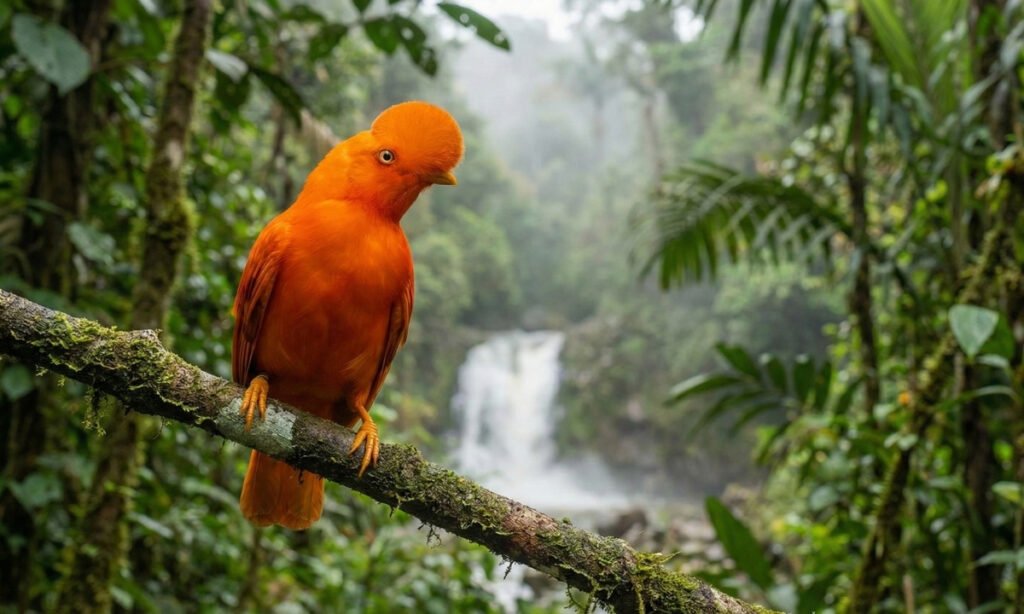
Deep in the jungles of the Guiana Shield (southern Venezuela) lives a bird so bright orange it looks like it’s glowing. The Guianan Cock-of-the-Rock (Rupicola rupicola) is famous for its perfect fan-shaped crest that completely hides its beak.
The “Lek” Dance: Males gather in specific areas called “leks” to perform elaborate dances and displays to attract females. It’s one of nature’s most vibrant spectacles.
Fun Fact: They love nesting on rock faces and cave entrances, perfectly blending into the orange-tinted rocks of the region.
 Bring the Wild Home
 Bring the Wild Home
Inspired by the vibrant colors of the Cock-of-the-Rock or the incredible uniqueness of these rare species? You don’t have to handle an Oilbird to appreciate avian beauty.
If you love birds as much as we do, check out the Wildbloo Etsy Store. We have a curated collection of unique, bird-themed items, art, and gifts that celebrate the beauty of the natural world. It’s the perfect way to keep a little piece of the wild with you every day.
Conclusion: More Than Just Oil
Venezuela is a land of extremes, and its avian population is proof of its incredible natural wealth. Protecting these rare birds isn’t just about ecology; it’s about preserving the soul of a country that is as beautiful as it is complex. Whether you are a seasoned birder or just an admirer of nature, Venezuela’s skies offer a story worth telling.